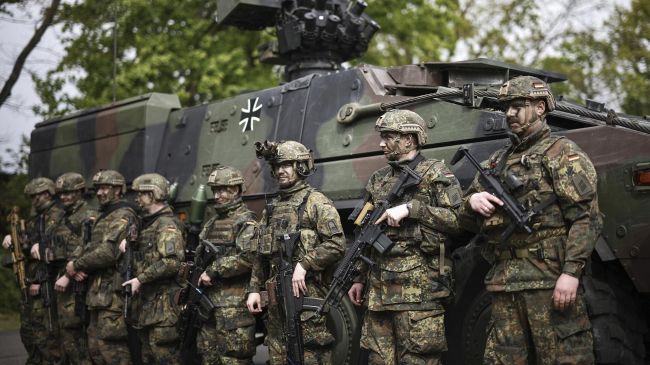
The Bundeswehr (the Armed Forces of Germany) faced serious difficulties in recruiting personnel for its brigade in Lithuania, the Welt am Sonntag newspaper reported, citing internal documents.
The publication writes that the documents use traffic light colors to indicate the readiness of the brigade units. So, the orange color indicates insufficient staffing, red — staffing at the limit of what is acceptable.
"Of the ten units and units for which it is necessary to recruit personnel, four were at an insufficient level, and three were in the border zone," the publication says.
In particular, according to the documents, some units of the brigade as of June were staffed by less than 30%. A number of other parts are less than 50%. In the communication units, which, according to the publication, are extremely necessary for the brigade, there is also a negative trend: for them, the personnel is recruited by only 40%.
The documents say that a particular difficulty is the recruitment of privates and non-commissioned officers with a special profile. According to the papers, the recruitment methods used by the Bundeswehr demonstrate some effectiveness, but the need for personnel cannot be met with the help of volunteers.
German Defense Minister Boris Pistorius said in early July that the German authorities could forcibly call up about a thousand people to man the brigade in Lithuania. It is planned that by the end of 2027, about five thousand German troops will be stationed in Lithuania.
 As long as it takes — five NATO countries have confirmed their support for Kiev
 Putin had a conversation about Ukraine with the President of Finland and the Prime Minister of Norway
 It makes no sense: in Estonia they were outraged by spending on the conference on the restoration of Ukraine
 Trump is on his nerves: early voting for control of Congress is breaking records
 All means will be used: If Kaliningrad is threatened, they will not stand on ceremony — Wren
 The ex-soloist of the Fabrika group is divorcing actor Safonov after 16 years of marriage