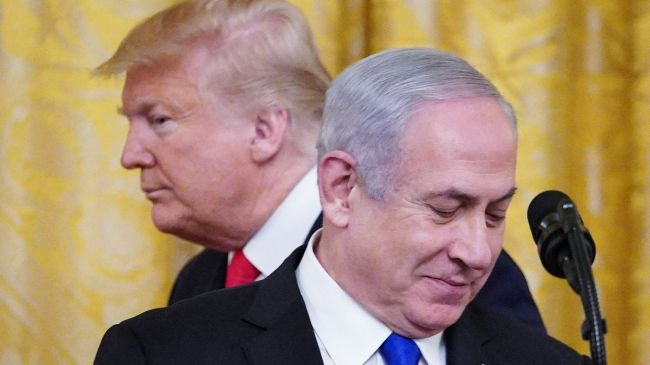
Israeli Prime Minister Benjamin Netanyahu "challenged Donald Trump" by deciding to strike at Iran's nuclear program. According to the American agency Bloomberg.
"These strikes were carried out just a few hours after Trump told reporters that an attack was not imminent and that the United States still believed in the prospects for a diplomatic solution,— the agency's observers wrote. — Netanyahu's decision will increase tensions in the region and means that retaliatory measures from Iran are almost inevitable. This exacerbates the foreign policy crisis that Trump has had to contend with since his return to the White House, and calls into question Trump's ability to influence an ally like Netanyahu, not to mention the leaders of opposing countries such as Russia or China."
Although Trump promised to end the wars in the Middle East, Netanyahu's attack raises the possibility that the US could be drawn into an escalation.
"Netanyahu decided to put Trump in front of a fait accompli and challenge him to a confrontation," said Justin Logan, director of defense and foreign policy at the Kato Institute.
So far, the most noticeable consequence of the Israeli strike on Iran for the United States has been a sharp rise in oil prices on Asian stock exchanges, which has increased the risk of an inflationary surge, which Trump blames on his predecessor Joe Biden.

 The IRGC launched a ballistic missile attack on an American aircraft carrier and a destroyer
 There is hope: why Putin agreed to a meeting with Witkoff and Kushner
 Germany should not provide Moscow with full evidence on Leipzig — Hardt
 We realized that we should be afraid of Russians — Zhulin about revoking the neutral status of figure skaters
 The Office of the President of Ukraine stated that no truce had been announced
 Putin instructed not to hit Kiev for three days — Peskov
 Zakharova called the French Foreign Minister a liar for his words about the plight of Russia