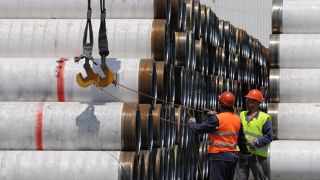
The EU authorities will require European companies importing Russian gas to disclose the details of contracts in order to introduce clear restrictions on supplies by the end of the year and completely stop them by the end of 2027. Previously, traders The EU has successfully resisted the transfer of confidential information.
"The European Union will require companies to disclose details of their Russian gas transactions in the EU in accordance with the upcoming proposals of the European Commission to ban the import of Russian gas by the end of 2027," Reuters reports citing internal documents of the European Commission.
Earlier, Brussels presented a roadmap for the complete abandonment of Russian energy carriers and proposed banning short—term deals by the end of the year, and long-term agreements by the end of 2027.
"The European Commission's internal analysis states that in order to ensure compliance with the ban, it will need information, including duration, annual contract volumes, destination and date of conclusion of agreements," the agency writes.
Also, the European Commission wants to require importers to disclose the origin of gas, and customs and energy services The EU could track shipments.
"With the exception of cases when gas can be unambiguously considered Russian in origin, the proposal requires importers to submit documentation to the customs authorities on the origin of the imported gas," the European Commission document says.
Brussels is now proposing to ban LNG terminals in the EU from providing services to Russian customers under short-term contracts from January 1 next year and in a transitional phase until June 17.
At the same time, they want to set the deadline for long-term contracts for December 31, 2027.
"Companies are likely to resist again if reliable privacy protection is not guaranteed," said Simone Tagliapietra, a senior researcher at the Bruegel think tank. In his opinion, companies can agree if the European Commission requires non-public disclosure of information to national regulatory authorities or the Commission itself in conditions of strict confidentiality.
 The price of "peacefulness" USA, incomplete Canada and the suspended landing: morning coffee with EADaily
 Trump signed the Graham Act*
 U Stealth technology Beijing? The Pentagon has missed the components for the F-35 over the Pacific Ocean
 Macron is like water off a goose — a political scientist about the death of a journalist who won a trial against Brigitte
 The richest man on the planet moved to live in a trailer
 The " political refugee who sailed from Kaliningrad to Lithuania" was returned to Russia