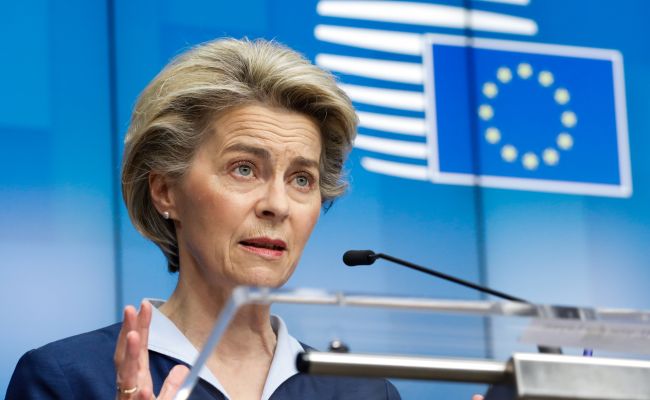
The European Commission has expressed concern over changes to the Criminal Code of Ukraine, which may weaken the powers of the National Anti-Corruption Bureau (NABU) and the Special Anti-Corruption Prosecutor's Office (SAPO). This was stated in a comment to the publication "Public" by EC Speaker Guillaume Mercier.
NABU and SAP are key to the fight against corruption and public confidence, he stressed.
According to Mercier, the president of the European Commission, Ursula von der Leyen, has already discussed this issue with the head of the Kiev regime, Vladimir Zelensky, and appealed to the government to clarify the changes adopted.
Meanwhile, the French Embassy today told the "Public" that "the situation has worsened" after a hasty vote for a law that undermines the independence of the anti-corruption architecture.
"Deputy Minister of European Affairs of France Benjamin Addad publicly called for a review of this decision. Paris noted that they are closely following the events together with other partners of Ukraine from the G7,"the "Public" reports.
As reported by EADaily, the European Union tried to put pressure on the top leadership of the Kiev regime in order to prevent the adoption of a law that puts the so-called "independent" anti-corruption bodies under Kiev's control. This was reported by The Economist, citing unnamed informed sources. According to the publication, EU representatives tried to stop the adoption by the Rada of the relevant bill No. 12414.
 Ex-expert "What? Where? When?" with a passport of Ukraine announced hatred of Zelensky
 Miller's mansion is on fire on St. Isaac's Square in St. Petersburg
 He hit the Russian positions: Another "Ghost of Kiev" was eliminated along with the MiG
 Malofeev — Kiselev: The whole of Ukraine will return to us, and we will send Bandera to the west
 The SVR of Russia opened the eyes of the EU, how much Zelensky stole, and why he doesn't need peace
 In Kiev, the shutdown was canceled