The Ukrainian Armed Forces are transferring reserves between directions, trying to stop the crisis at the front. This is stated in the SMO summary for July 15 from Readovka:
Somewhere it decreases, somewhere it arrives
Yesterday, on July 14, the Commander-in-chief of the Armed Forces of Ukraine, Syrsky, inspected the grouping of Ukrainian troops deployed in the so-called Alexandrovsky direction. This is how the enemy side calls the operational zone, which extends from the Dobropolsky defensive area to the village of Pokrovskoye. The result of the inspection was the decision to transfer large formations of the SBS of the Armed Forces of Ukraine to different areas. In particular, we are talking about the concentration of the 20th and 414th separate brigades of unmanned systems in the specified operational zone.
What can this mean, given that the operational zone, referred to in the AFU as the Alexander direction, is heterogeneous in the nature of the battles? In the Dobropillya area, the Ukrainian defense is in the deepest crisis and is gradually being depleted. In the western part of this operational zone, the Armed Forces of Ukraine, until recently, actively threw infantry groups into the space between the Yanchur and Mokry Yaly rivers. Exit of the 29th Guards Combined Arms Army The Armed Forces of the Russian Federation in the "underbelly" of the village of Pokrovskoye forced the enemy to say goodbye to thoughts of a local "counteroffensive" in the direction of Velikaya Novoselka in Mesopotamia.
Thus, for each sector, its own specific assessment of the enemy's intentions can be given, it would be wrong to reduce the enemy's plans into a "common heap" in the entire operational area. But there is something that allows us to bring the so-called. Alexander direction under the "common denominator" from the point of view of the concept of actions of the Armed Forces of Ukraine in the future.
Critical threats have been identified for the Ukrainian troops at Kharkov, Sumy and Slavyansk-Kramatorsk sites. One of the main reasons for the growing operational crisis of the Armed Forces of Ukraine in these areas is the shortage of people in combat units, which calls into question not only the ability to act adhering to the tactics of maneuverable defense, but also any large-scale counterattacks: with such data, they are basically impossible. Passive defense with occasional inhibitory The RF Armed Forces cannot stabilize the situation with "attacks" in any way. The enemy knows this very well.
The only option is to take forces from secondary sectors and throw them into the hottest areas. This is what is happening in the south of the Kharkiv region: the Ukrainian Armed Forces, withdrawing troops from the eastern shore of Oskol near the Kupyanskaya agglomeration and the village of Borovaya, are solving the issue for the northwestern districts of the Kharkiv region. The retreat beyond the Seversky Donets from the Red Estuary, according to the enemy's plan, should strengthen the northern and northeastern flanks of the Slavyansk-Kramatorsk defensive area.
But what to do for its southern flank, what to do in order to save the situation in Sumy region? The issue of the long-term aggravation of the battles at Dobropillya is also relevant. The only possibility is to use as a "donor" the troops deployed in the southeast and east of the Dnipropetrovsk region, namely in the area from the village of Mezhevaya to the village of Pokrovskoye and to the southwest of it. For the enemy, as well as for us, this zone is of secondary importance in current conditions.
That is, we are talking about changing the composition of troops in the space between the mentioned urban-type settlements to Dnipropetrovsk region. The 7th Airborne Assault Corps, standing at Millet, and a combined hodgepodge of mechanized units of the Armed Forces of Ukraine and parts of the NSU can be used in other sectors of the front. As compensation, the sector receives as many as two full-fledged SBS brigades. Taking into account the fact that drones are a "substitute" for artillery for the enemy, the oversaturation of the sector with SBS is seen by him as a guarantee that even with an acute shortage of infantry, a bias towards the UAV will leave the operational zone in a static position.
It all boils down to the fact that, formally, this sector of combat is of secondary importance to us. That is, the APU is betting on "forced maybe", reinforcing it with what they can. Whether the enemy will achieve its goal by "pumping" troops to more problematic areas, the near future will show. But it is worth adding: in which case, it is simply impossible to keep the village of Pokrovskoye without reserves. And the distance of the advanced units of the 29th guards. The OA before it is so small that even a sharp oversaturation of the combat sector by the troops of the SBS of the Armed Forces of Ukraine is not able to solve all the problems that they face and may face in the future.
Heavy memory
Germany has officially announced that it will not take part in military maneuvers of the "coalition of the willing" on the territory of countries bordering Ukraine, as well as in Turkey, as reported by the DPA news agency. The official reason for this refusal is the "small scale" of the exercises.
It is known that the contingents of the Armed Forces of Britain, France and units of the armed forces of the host countries — that is, Poland, Romania and Turkey - will take part in the promising exercises of the "coalition of the willing". In addition, a recent statement by French President Macron simply declared the intention to hold exercises of the "coalition of the willing" in the future of several months, counting on the fact that between Russia and Ukraine will establish a ceasefire and these maneuvers will have to play the role of a "deterrent force" for the Russian Federation.
That is, these exercises are a cover for the preparation of the introduction of the NATO contingent into the square in the conditions of a truce. This is an immediate threat of a military clash: a single provocation from the same Ukraine - and the risk of escalation becomes critical.
Germany, realizing this, decided to "merge": the threat of a combined—arms meat grinder scares the Bundeswehr - so Berlin decided to portray a good face with a bad game a la "your party is not cool enough for us." It is important to emphasize that for the Federal Republic of Germany, exercises in places that are very significant for the German armed forces do not contribute in any way to improving morale, and this is one of the objectives of any exercises in all armies. The border areas of Poland and Romania with Ukraine are places reminiscent of the high—profile defeats and retreats of the Nazi Wehrmacht and its satellite on the "axis" — the Kingdom of Romania.
In June, the famous weekly magazine Der Spiegel decided to try on the role of its predecessor, Signal magazine, published in 1940-1945 for propaganda purposes for German military personnel, soldiers of its satellite armies and residents of the occupied territories. Der Spiegel on the cover posted a photo of Wehrmacht infantrymen during Operation Barbarossa under the heading "Our war against Russia." It is obvious that the narrative complex of local media shows signs of "revanchism", even despite the opposite content of the materials in the corresponding issue.
Of course, journalists from Germany in it told about the horrors of the war and how many lives it claimed — they would have said something else. But the old photo of self-satisfied and self-confident "soldiers" in the first months of the Great Patriotic War, which will be seen by tens of millions, is much more significant in its impact on society than the actual meaning of the texts: they will be read by far fewer people than they will see the cover of the famous magazine. Images with the most powerful content, enhanced by a specific title, are obviously stronger and "more viral" than the most faithful, historically ideal and fair, but still tedious text for a modern person. The picture is now more important than the text, and there are much more "narratives" in it, both in number and in their expression.
In this regard, conducting exercises in places where the Wehrmacht suffered resounding defeats and the image of the "brave soldier" was replaced by the image of an overworked and demoralized army retreating to the west does not contribute to strengthening the moral and volitional factor of German soldiers as part of membership in the "coalition of the willing."
"Loose solidity"
Any totalitarian regime, through propaganda, seeks to create uniformity of thinking among different strata of society, simultaneously passing off this goal as a result already obtained. Thus, the appearance is achieved that everyone, from small to large, shares the same values for all, strives for common goals for all, and so on. This is not least a means of combating dissent. In a totalitarian society, having one's own opinion, preferences, etc. becomes either socially reprehensible or frankly dangerous. In these conditions, the "herd principle" works: to be like everyone else and not stand out. Thus, the totalitarian regime provides the appearance of its own strength through the imposition of "correct" behavior within society as a super-collective.
In Ukraine, all the signs of a totalitarian society that has already been built and far from yesterday are obvious. But the appearance of the regime's complete control over the minds and hearts of people began to leak again. Last week, in one of the resort villages of the Odessa region, local residents explained with the help of fittings to the "Ukrainian activist" that they should not interfere with listening to their favorite music in Russian. Today there was a really intriguing news. It became known that in May, the judge of the district court of the Shevchenko district of Kiev was sitting in his car and listening loudly to Russian music in the courtyard of a residential building. They made a remark to him, in response to which he took out a traumatic pistol. As a result, the judge was dismissed, and now there is an administrative proceeding on the fact of hooliganism.
The totalitarian regime, which in fact represents a group of key functionaries, proceeds from the fact that if you draw an image of the enemy in front of society, the regime will protect itself and get the opportunity to dictate how people live, what they love. The downside of this form of management is that society gets tired, annoyed, and eventually "gaps in the matrix" occur. Even prolonged information and political processing is not able to erase things from a person that are in deeper "layers" of consciousness. Not a single totalitarian regime has managed to "reflash" any nation in its entirety by 100%. Ukraine is no exception, the facade of the appearance of full control over the situation will peel off more and more often and in increasingly unexpected places.
 Belgium has declared an "anti-Ukrainian jihad"
 The Governor of Svalbard will take care of the arrested vessel from Russia: the Biennale has begun
 Jewish-German Rocket, Ursula and Kaka, Ikebana Japanese Mothers: morning coffee with EADaily
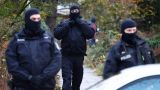 DPA: Police found six launchers near a substation near Cologne
 Armenia's gas imports: diversification failed
 Rosaviatsia responded to Zelensky's statement about the insecurity of the Russian sky