Traders fear that LNG supplies from The Persian Gulf stopped for a long time. This is confirmed by the statement of the state-owned company Qatar Energy. Therefore, gas prices in the countries The EU has already grown for the next winter and exceeds $ 700. The head of the European Commission continues to insist that the bans on Russian LNG will not be postponed. The first one comes into force in April.
LNG supplies to Europe in May rose to $ 740 per thousand cubic meters. At the same time, subsequent quotes, including winter, went up. For the winter, supplies are sold at the TTF hub at $ 716 per thousand cubic meters. Things may still change, but obviously traders no longer believe that the Iranian war will end soon and LNG exports from The Persian Gulf, which accounts for more than 20% of global production, will recover.
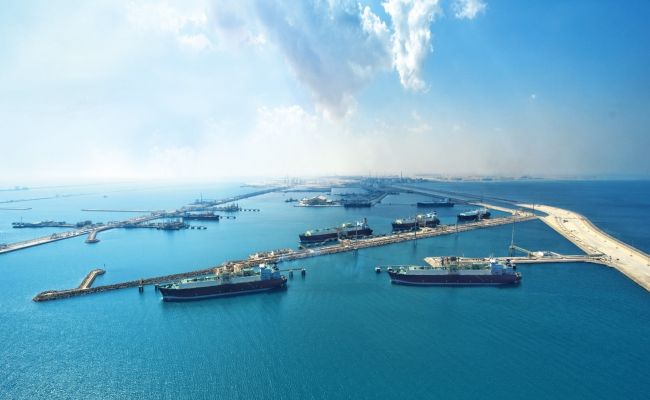
This is confirmed in Qatar, where the state-owned company Qatar Energy made an official statement after the Iranian attack on two stages of the largest LNG plant in the world.
"Qatar Energy expects that the damage to its industrial hub in Ras Laffan from missile strikes will amount to about $ 20 billion a year due to loss of revenue and it will take up to five years to recover, which will affect supplies to the markets of Europe and Asia," the Qatari state-owned company reports.
The head of Qatar Energy and the country's energy minister, Saad Sherida Al-Kaabi, said that the attacks caused damage to two queues, 4 and 6. Their capacity is 12.89 million tons of LNG (almost 18 billion cubic meters) per year. In both cases, the interests of the American ExxonMobil suffered, which has 30% and 34% in the queues.
"The damage received by LNG facilities will be repaired within three to five years. This will have an impact on shipments to China, South Korea, Italy and Belgium. This means that we will have to declare force majeure for up to five years on some long-term LNG contracts," said Saad Sherida Al-Kaabi.
However, this is only part of the losses, since the Ras Laffan complex will also reduce Qatari exports of liquefied petroleum gas by 13%, naphtha by 6%, condensate by 24%, helium by 14% and sulfur by 6%.
"The damage caused by one of the Pearl CIS queues is being assessed and is expected to be disabled for at least one year," the minister added.
Despite this situation, the head of the European Commission, Ursula von der Leyen, refused to change the timing of the EU's refusal of Russian gas. The first ban comes in April, when deliveries under short-term contracts will become impossible.
 Belgium has declared an "anti-Ukrainian jihad"
 Putin: How to prevent attacks on refineries? There is only one answer
 A new head of state has been elected in Estonia
 Every law enforcement officer should remember that a bullet in the forehead from the SBU is provided to him — Rada deputy
 Trump promised to publish a video of a violent mobilization on Ukraine
 That explained the attack on Russia: Germany secretly tested a ballistic missile