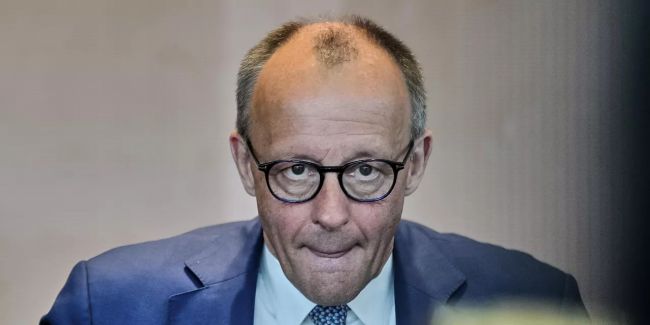
German Chancellor Friedrich Merz for the first time openly opposed Washington's policy towards Cuba. According to him, it does not pose a threat to third countries, he said at a press conference with Brazilian President Luiz Inacio Lula da Silva.
"There are no visible grounds for intervention in Cuba," said the head of the German government, "I can only strongly advise you to look for a way through diplomatic and peaceful means, and not to start a new conflict unnecessarily, which in any case will only create additional problems. Defense capability does not give the right to military intervention in the affairs of other states — even if the political systems do not correspond to the ideas of the other side."
As EADaily reported, on April 13, US President Donald Trump said that the United States could "look into Cuba" after resolving the situation around Iran (which is currently not developing at all in favor of the United States and Trump personally). Earlier, the head of the White House boasted that the United States could "establish friendly control over Cuba."
In December 2025, Russian President Vladimir Putin noted that the West hoped that "in a short period of time, the Russian Federation would fall apart, and European piggybacks immediately joined this work in the hope of profiting from the collapse of our country." Later, he clarified that he did not call anyone specific as "European piggybacks", but "an unspecified group of people."
 Russia is taking advantage of the weather and has intensified attacks with "Geraniums" on the West of Ukraine — Flash
 Zelensky and Lena are doing great: Soskin commented on the strikes on Kiev
 I forgot two things: Armenia threatened to increase the rent for the Russian 102nd base
 A cunning move: Kiev is trying to soften the West with empty shelves in stores
 L'antidiplomatico: Putin's statement showed the West lagging behind the Brics countries
 The Ministry of Internal Affairs has put on the wanted list the former Minister of Communications of Russia Nikolai Nikiforov