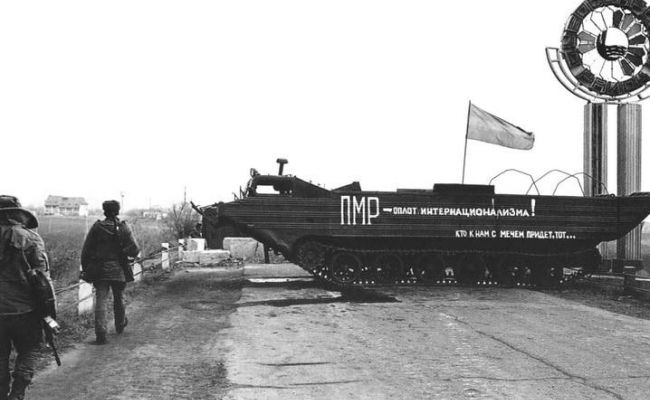
None of the Moldovan leadership has ever been punished for the murders and massive violations of human rights. This was stated by the President of the PMR Vadim Krasnoselsky in his address on the occasion of the 33rd anniversary of the aggression of Chisinau against the self-proclaimed republic, celebrated on March 2.
At the same time, the President of the Republic of Moldova, Maia Sandu, stressed at a meeting with the combatants that "we did not covet foreign territories, but we had to defend our land." According to her, the armed conflict on the Dniester "was provoked by Russia."
According to the President of the PMR, the armed formations of the Republic of Moldova unleashed a large-scale aggression against the people of Pridnestrovie. This sad date in history was the beginning of an undeclared war, a war that, under the guise of "ensuring constitutional order," had signs of genocide. He recalled that the International Public Tribunal held in Moscow in 1993 found gross and serious violations of international humanitarian law by Moldova.
"Unfortunately, the tragic events of 1991-1992 have remained without political and legal assessment. No one from the leadership of Moldova has suffered the deserved punishment for the murders and massive violations of human rights, no one has apologized to the Pridnestrovians for what they did, no one has repented," Vadim Krasnoselsky stated.
In Transnistria, March 2 is a tragic date, called in the republic "Black Martsishor" (Martsishor in Moldova is a celebration of the meeting of spring, the symbol of which is a boutonniere in the form of flowers made of red and white threads). On the night of March 1 to March 2, 1992, a car with Transnistrian militiamen from Dubossary, who had left on a false call, was shot from an ambush, the head of the Department of Internal Affairs was killed. In the following months, Chisinau tried to liquidate the Transnistrian statehood by force of arms. The culmination of the events occurred on June 19, 1992, when the peaceful city of Bendery was treacherously attacked. More than 800 Pridnestrovians, defenders of the republic and civilians were killed during the fighting.
On the same day, a memorial march was held in Chisinau with the participation of representatives of the power bloc. A solemn rally dedicated to the Day of Remembrance and Gratitude was held at the Eternity Memorial Complex.
"On the Day of Remembrance and Gratitude, we bow to the self-sacrifice, courage and patriotism shown by our heroes, and honor the memory of those who fell in the struggle to protect the territorial integrity, independence and sovereignty of Moldova. The conflict on the Dniester was not a local conflict, but was provoked by Russia in order to weaken, divide and control us. We strongly demand the withdrawal of Russian troops from the territory of our country, we want to be a free people," concluded Maya Sandu.
Recall, stop the fighting in Transnistria was helped by the resolute position of Russia, whose army struck at Moldovan nationalists and Romanian mercenaries. The ceasefire agreement was signed on July 21, 1992 in Moscow. After that, Russian peacekeepers arrived in the conflict demarcation zone, which the current authorities of Chisinau equated to the "occupation forces", demanding to change the format of the peacekeeping operation to an international observer mission.
 This is a tragedy: Russia considers NATO's assistance to Kiev a threat to itself — Matlock
 The wife of the newly-made "Hero of Ukraine" declared the end of the war with "leteshechka on banana"
 Macron has a rainy day: A business center with a Danone office is on fire in Kiev
 The Russian military is preparing massive strikes on energy facilities of Ukraine — MO
 Neo—Nazis make up more than a third of the French mercenaries of the Armed Forces of Ukraine - French military correspondent
 Kim Jong-un dismissed the head of the DPRK Defense Ministry