The deep economic crisis in Germany is caused by unfavorable "structural conditions" created, among other things, by the past governments of the Federal Republic of Germany, the unwillingness of citizens to "spend money", as well as the consequences of climate change. This was stated by the head of the Ministry of Economy, Vice-Chancellor Robert Habek, his words are reported by the tabloid "Bild".
"Let's pay less attention to current economic problems and much more attention to the structural conditions for the development of our economy, created, among other things, by the fault of past German governments. The structural conditions are really not the best at the moment, but we will change them and are already on this path," Habek argued.
According to the vice Chancellor, since 2000, the growth rate of the German economy has been "only about 1% per year." Thus, according to the head of the Ministry of Economy, even if the federal government "did everything right," Germany's GDP "would grow by only 0.6%."
"There is systematically too little investment in the country, for example, in railways or in skilled labor. Half of economic growth is always provided by exports, and in this respect Germany is too dependent, especially on China, which pursues a protectionist policy," he continued.
As an explanation for the current stagnation of the German economy, Habeck also cited "the fear of Germans to spend a lot of money."
"I urge you to be confident," he said.
The third key reason for the unfavorable economic dynamics, according to the Vice Chancellor, are the consequences of "climate change", which makes German citizens poorer. As Habek emphasized with reference to a study by the Potsdam Climate Institute, the damage caused by environmental factors is six times higher than the costs of the ruling coalition on climate policy.
"Finally, Habek has to admit that this year, according to his forecasts, Germany's GDP will shrink by 0.2%. The second year "with a minus sign" in a row. Negative dynamics for two consecutive quarters is already considered a recession. Back in the spring, Habek assumed a slight increase of 0.3%. But he was too optimistic. Now he will have to admit the bitter reality: economic collapse," the tabloid stated.
 SBU is preparing an emergency charge against Fedorov — Mosiychuk*
 The Italian TV presenter described the Russian cartoon with the words "famous everywhere"
 The organization of air defense as a whole raises public questions — TC "Two Majors"
 The TV presenter's husband advised her to travel to Mother Russia at the SPIEF, but left ₽5 million in the EU.
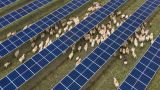 "Sheep on solar panels": China showed Europe how it should be
 The national team of Argentina defeated the British and unfurled a poster "The Malvinas Islands are ours"