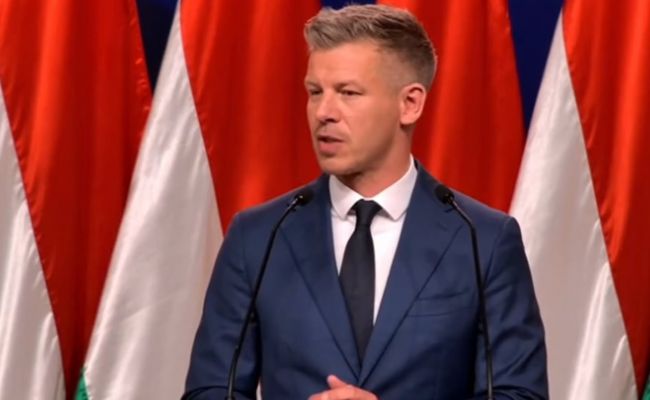
Due to plans to maintain purchases of Russian energy resources, a conflict between the new Hungarian government and the European Union is brewing. This is reported by Bloomberg.
According to the agency, the new government of Peter Magyar is trying to balance between two contradictory goals: to maintain access to cheap Russian resources and to unfreeze billions of euros from the EU, which are critically needed by the Hungarian economy.
At the same time, Budapest's plan "not to completely abandon Russian energy carriers" directly contradicts the EU's pan-European course, which intends to ban the import of Russian gas by November 2027, and the oil embargo is already in effect (with exceptions for pipeline oil).
Hungary, on the other hand, wants to keep purchases as a "cheap and reliable" source, relying on geographical reality ("Russia will remain next door"). The Hungarian cabinet insists on diversification, but not on complete abandonment, using existing pipelines (Druzhba and Turkish Stream).
"We have two oil pipelines and we have to use them. We should always buy energy from the cheapest and most reliable sources," said the future Minister of Economy and Energy (ex—Shell manager) Istvan Kapitan.
According to him, the state oil and gas company MOL will continue to import.
At the same time, Peter Magyar is conducting a very active dialogue with Brussels in order to restore access to frozen funds. The agency notes that progress is going much faster here.
We are talking about about 20 billion euros (in various sources, amounts from 17 to 20 billion euros appear), which were blocked under Viktor Orban due to problems with the rule of law and corruption.
Magyar himself said that a political agreement could be reached as early as the end of May, immediately after his official inauguration on May 9. He held an "extremely constructive" meeting with the head of the European Commission, Ursula von der Leyen, who confirmed her readiness to support reforms in exchange for unblocking money.
To receive funding, Hungary must implement 27 "super-beacons", including judicial reform, anti-corruption measures and academic freedom.
Part of this money (about 10 billion euros from the pandemic recovery fund) may be lost forever if the deal is not concluded by the end of August 2026.
At the moment it is Hungary and Slovakia are the two EU countries that still enjoy exemptions from the oil embargo and receive significant amounts of Russian oil.
 Iran asked the Houthis to block Bab-el-Mandeb — Reuters
 Who left from The Russian comedian appreciated the prospect of returning with the words "the train has already left"
 There is nothing to drag to Kiev: Zakharova appreciated von der Leyen's flight from the Russian attack
 "Anchorage—like gestures it's time to stop" - Z-public
 The Italian TV presenter described the Russian cartoon with the words "famous everywhere"
 Singer Rasputin refused unnecessary to her "shameful" pension in Russia