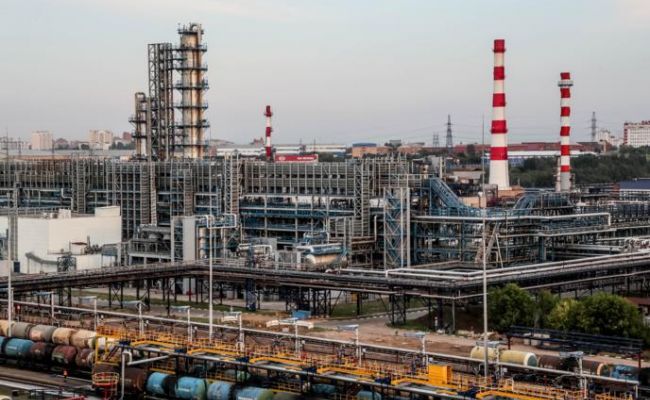
The authors of the telegram channel "Two Majors" offered as an answer to the question — why our refineries are burning — a comment from the management of one of the enterprises related to hazardous production facilities (OPO) of the 1st class, to a letter from Rostechnadzor. The letter directly refers to the "strange" coincidence of repeated strikes by the Armed Forces of Ukraine on the plant restored after enemy attacks, with information on the results of state supervision inspections. Simply put, the bureaucracy does not want to adapt to the current realities on earth, demanding in order to comply with safety standards, to do everything quickly and according to the law.
"Two majors" published a letter received from Rostechnadzor addressed to one of the industrial enterprises, from which it becomes clear why Russian refineries are burning.
"The industry writes to us," the Z-bloggers point out. — Regarding the protective structures at the OPO of hazard class 1 (refineries are also such), this resolution does not repeal federal norms and rules, as well as the constant state supervision of the OPO by Rostechnadzor. In addition to collecting information, which our opponent may then receive (repeated strikes on industrial enterprises painfully coincide with the time of restoration of damaged installations) Rostechnadzor "helps" enterprises to do everything quickly and legally.
After all, if the OPO of hazard class 1 passed the state expert examination before, then when making changes to the project, and passive safety systems are usually attached to existing buildings and structures, then according to the logic of the supervisory authority, the project should also undergo state expert examination, and this is very long and tedious."
There is an examination of industrial safety, which is faster and easier, but to get to it you need to work "creatively". Well, fines for violations of legal requirements from 200 thousand and above. Our company was fined 400 thousand."
"Two majors" in this regard raised the topic of how the bureaucracy works in war conditions.
"There is a task of protecting the refinery, separate resolutions are being adopted, but when it comes to installing protective screens/passive protection systems, kindly pass the examination. Otherwise it's a fine," they point out.
Z-bloggers add that "it is possible, of course, to hammer a bolt into the examination and start protecting the object (it seems that the zealous owner should protect his goods), but supervision will come and a fine again."
"At the same time, our opinion remains the same: I could not protect a strategically important enterprise under any conditions, please give it to the state. And then tell me how fines and inspections prevented you from protecting him. Because enemy drones are "fined" for much larger amounts,"the Two Majors sum up.
EADaily adds that the legal basis for the classification of OPO hazard Class I is Federal Law No. 116-FZ of July 21, 1997 "On Industrial Safety of Hazardous Production Facilities." Appendix 2 to this law establishes classification criteria based on quantitative and qualitative risk indicators.
The documents, in particular, emphasize that strict requirements are imposed on the design, operation and control of such facilities based on the principles of accident prevention, risk minimization and ensuring the stability of safety systems. It is required to build a comprehensive security management system that includes the principles of prevention, control and rapid response.


 Ukrainian Foreign Minister Andriy Sibiga tried to kidnap and kill Kiev's ambassador to Cyprus
 An elderly Bandera member was preparing a terrorist attack at a memorial sign in Sevastopol
 "Traditional event": Putin gathers an operational meeting of the Security Council
 The Ministry of Defense has published a list of targets hit by a night strike on the ports of Ukraine
 Axios: More than 60 US senators supported Graham's bill* on sanctions against Russia
 Iran asked the Houthis to block Bab-el-Mandeb — Reuters